How to Choose Solar Garden Lights for Security

Time:2026-11-06 Author:Ethan
0%

A well-lit garden can make a home feel safer, but not every solar light provides useful security illumination. A small stake light may mark a flower bed beautifully while leaving a gate or side path in deep shadow. The key is matching brightness, placement, and operating time to the area you want to see. Are solar garden lights bright enough for security? Often, yes, when they have suitable output, a clear view of the target area, and enough sunlight to charge reliably. They are not all equally bright, though. A decorative light and a motion-activated security light serve different purposes.

Before choosing, check the manufacturer’s lumen and runtime figures, then consider where the panel will receive direct sun. Trees, walls, and short winter days can reduce charging, so published runtimes may not match every garden. Small details matter. Look for weather-resistant construction, a responsive motion sensor, and a beam angle that covers the entrance rather than shining into a neighbor’s window. If possible, test the light after dusk and adjust its position; a few feet can change what it illuminates. One light may still leave blind spots. Solar lighting can improve visibility, but it should not be treated as a guarantee of security. This guide explains how to compare practical features and choose lights that suit your garden, climate, and everyday needs.
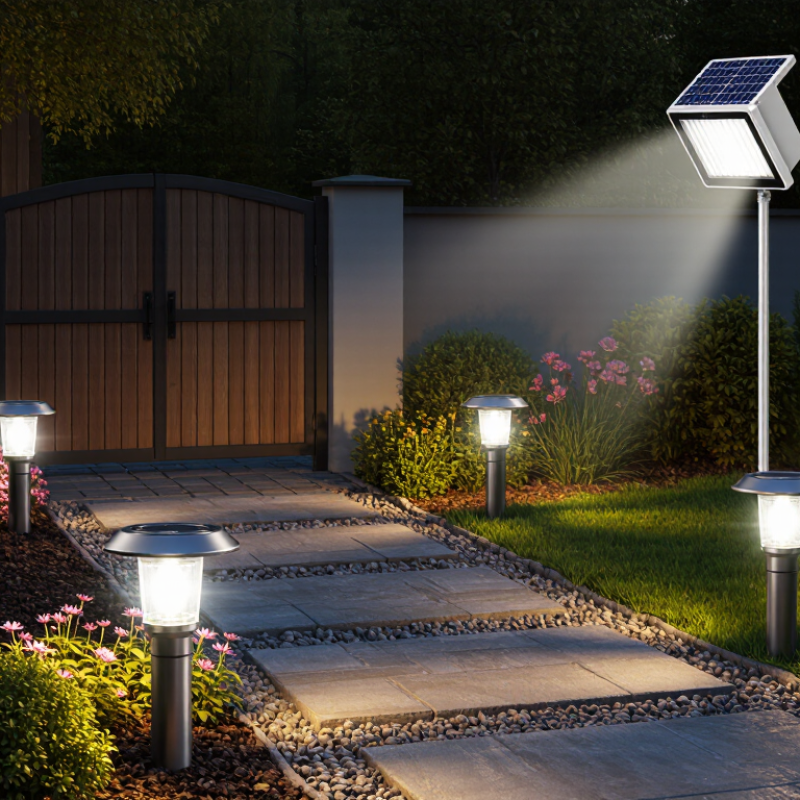
How to Choose Solar Garden Lights for Security

Map entrances and paths using IES RP-33-14 exterior-lighting guidance

Draw a simple site map before choosing fixtures. Mark the front door, gate, garage, steps, and every path junction. Apply the visual-task approach in IES RP-33-14, Lighting for Exterior Environments: light should help people see hazards and navigate, not merely make the yard bright. Give entrances clear visibility, then trace an even route between them. Keep beams aimed downward and away from windows, neighbors, and drivers. Less glare helps preserve useful contrast.

Use the National Solar Radiation Database (NSRDB) to check local solar-resource data. Its records include solar irradiance at 30-minute intervals for many locations. Compare seasonal conditions, then note where trees, walls, or roof eaves shade each panel. A sunny noon snapshot can mislead. Real yards rarely match a clean diagram. Place a test light near a gate and walk the route after dark; look for black gaps between pools of light, especially at turns and steps.

Do not assume more fixtures mean better security. IES guidance emphasizes visual comfort and appropriate distribution, so avoid bright spots that leave adjacent areas hard to see. Record fixture positions and shadows on the map, then adjust spacing or aim. The plan may still need revision. Solar output also changes with weather and season, so check whether the chosen locations receive enough daylight before relying on them for nightly wayfinding.

Compare lumen output, beam spread, and uniformity for each security zone

Divide the yard into security zones before comparing solar garden lights. A gate, a side path, and a shed entrance need different coverage. Check lumen output, beam spread, and uniformity together; lumens alone cannot show whether a narrow beam leaves dark gaps. A bright pool beside a shadowed path may look reassuring from the patio, but it offers uneven visibility.

At a gate, moderate output with a wider beam can reveal a visitor and nearby obstacles. Along a narrow path, a more focused beam may reach farther, but space fixtures to prevent alternating bright and dark patches. For a shed entrance, aim for enough light to see the latch and ground clearly. Too much glare can make nearby details harder to distinguish. Small changes in mounting height can alter the beam noticeably.

Compare manufacturer coverage diagrams with the actual layout, then test the lights after dark. Walk each zone from several angles and notice where shadows collect, especially near shrubs, steps, or fence posts. Even light matters. One fixture may appear powerful on its own yet leave the next stretch dim. Solar output can also vary with shade and charging conditions, so a single evening is not a complete test. I would reassess after a few nights; that extra check is easy to skip.

Size the solar panel and battery for nightly runtime and winter sunlight

How to Choose Solar Garden Lights for Security

Start with the hours you need, not the panel’s advertised brightness. A 3-watt light running for six hours uses about 18 watt-hours. Allow extra battery capacity for conversion losses, aging, and cloudy nights. Check whether the stated battery capacity is usable energy or just its nominal rating. Motion-sensor lights can conserve power, but frequent nighttime activity may shorten runtime.

Winter is the harder test. Short days, low sun, and bare branches can reduce charging, even when the panel looks large. Place it where it gets several hours of unobstructed daylight, and check the spot in winter if possible. Compare the panel’s daily energy output under realistic local conditions with the light’s nightly use. A larger battery cannot make up for a panel that repeatedly harvests too little energy. It is easy to overestimate sunshine.

Tips: Choose a system with a runtime margin, and test it through several cloudy evenings. If the light fades before dawn, note the weather, hours of direct sun, and sensor activity. That small record can reveal whether the panel needs a better position or the battery needs more capacity.

Choose IP65-rated fixtures: IEC 60529 defines dust-tight, water-jet protection

For security lighting, an IP65 rating helps a fixture withstand dusty paths and rain exposure. IEC 60529 defines the protection ratings. The first digit, 6, means the enclosure is dust-tight. The second digit, 5, indicates protection against water jets under specified test conditions. That matters near sprinklers or wind-driven rain. It is not an immersion rating.

Treat the label as a starting point, not a guarantee of reliable lighting. Check that the rating applies to the complete assembled fixture, including its solar panel connections and battery compartment. A cracked gasket or loose cover can weaken protection. Not underwater. Position lights where their panels receive useful daylight, while aiming beams toward entrances, gates, or dark paths. Wipe dust from the panel and inspect seals after harsh weather. Even an IP65 light may underperform in winter shade; the rating does not promise a full night of illumination. A little extra shelter can help, though it should not block sunlight or the beam.

How to Choose Solar Garden Lights for Security — Choose IP65-Rated Fixtures: IEC 60529 Defines Dust-Tight, Water-Jet Protection
Selection factor What to check Practical guidance Why it matters
Ingress protection Look for an IP rating stated for the complete fixture and supported by product documentation. IP65 means the enclosure is dust-tight (first digit 6) and protected against water jets (second digit 5) under IEC 60529 test conditions. Garden lights are exposed to dust and rain. IP65 does not mean the fixture is suitable for immersion or every possible water exposure.
Installation exposure Check whether the light will face sprinklers, pressure washing, standing water, or flooding. Match the rated fixture to the actual location. Do not treat IP65 as protection against submersion; follow the installation instructions and keep the unit out of flood-prone spots. Water exposure varies by site, and an IP rating describes defined tests rather than unlimited weather resistance.
Security coverage Review the detection area, sensor direction, mounting height, and any stated detection range. Position the sensor toward likely approach paths and adjust it to reduce triggers from roads, moving foliage, or neighboring areas. Verify coverage at the installed height. A bright light is less useful for security if the sensor does not detect movement where it matters.
Light output and beam Compare stated light output, beam distribution, and intended mounting distance. Choose a beam that illuminates entrances, paths, or other priority areas without directing unnecessary glare toward windows or public spaces. Lumens describe total light output; they do not by themselves show how much light reaches a particular area.
Solar charging conditions Check whether the solar panel is integrated or separately positioned, and whether its cable and orientation suit the site. Place the panel where it receives substantial direct sunlight and is not regularly shaded. Follow the manufacturer’s guidance on orientation and cleaning. Shade, season, weather, and panel position affect how much energy the system can collect.
Battery and operating time Look for battery type, replaceability, charging requirements, and stated operating-time conditions. Compare runtime claims under the same operating mode and note whether they assume a certain amount of sunlight or a limited number of sensor activations. Actual nighttime operation depends on charge received, battery condition, temperature, and how often the light activates.
Controls and modes Check for adjustable sensitivity, dusk-to-dawn control, motion-activated operation, and selectable brightness modes. Choose controls that let you balance useful illumination with battery conservation, then test the settings after installation. Appropriate settings can help the light operate more reliably through the night.
Outdoor durability Review instructions for temperature limits, UV exposure, corrosion resistance, and maintenance. Confirm that the fixture is intended for the local climate. Inspect seals and mounting hardware periodically, especially after severe weather. IP65 addresses dust and water ingress under specified tests; it does not by itself certify resistance to UV exposure, corrosion, impact, or all temperatures.
Evidence and installation Check that the IP rating applies to the assembled product, including covers, seals, and cable entries. Follow the installation instructions and keep access covers properly closed. Avoid drilling or modifying the enclosure unless the instructions permit it. Changes to seals or openings can compromise the enclosure’s stated protection.

Check sensor range, activation time, and tested runtime before installation

For security, a solar garden light needs to detect someone before they reach a door or path. Check the sensor’s stated range, then test it at the actual mounting height. Walk toward it from the side and straight on; some sensors respond differently to each approach. Trim leaves that sway across the detection area. A small obstacle can create a surprisingly large blind spot.

Check how quickly the light activates after motion begins. A delay of several seconds may leave a visitor in darkness for the most important moment. Stand at the edge of the intended coverage and move naturally, rather than waving at the sensor from close by. Test again after dark. Easy to overlook. Pets, passing branches, and warm surfaces may also trigger some models, so observe the light over several evenings before choosing its final position.

Runtime claims need a real-world check. Fully charge the unit, then note how many nights it stays bright with your usual number of activations. Repeat during cloudy weather if possible; sunlight and battery age can change results. A bright first evening proves little. I would treat a single test as a rough guide, not a guarantee, and leave some margin between the measured runtime and the coverage you depend on.

How to Choose Solar Garden Lights for Security

Check sensor range, activation time, and tested runtime before installation. These are example screening targets—not universal product specifications. Test lights in the intended locations and adjust the targets to suit your property.

Sensor detection range

Activation time

After-dark runtime

Test detection from likely approach directions, time how quickly the light switches on, and record how long it stays useful after a full charge. Shade, weather, settings, and season can affect solar-light performance.

FAQS

How do I estimate the battery capacity I need?

Multiply the light’s wattage by its nightly hours. A 3-watt light running for six hours uses about 18 watt-hours. Allow extra capacity for energy losses, battery aging, and cloudy nights.

Can a large battery make up for weak winter sunlight?

Not by itself. Short days, low sun, and shade can limit charging. Check whether the panel receives several hours of unobstructed daylight, especially in winter.

How can I tell if a solar light will last through the night?

Fully charge it and test it over several nights with your usual motion activity. Repeat during cloudy weather if possible. One bright evening proves little.

What does an IP65 rating mean for a garden light?

The fixture is dust-tight and protected against water jets under specified test conditions. It is not rated for immersion. Check that the rating covers the assembled fixture and its connections.

Where should I place the light and its solar panel?

Put the panel where it gets useful daylight, then aim the beam at a gate, entrance, or dark path. Keep branches and other obstacles out of the sensor’s view.

How should I test the motion sensor’s range?

Test it at the planned mounting height. Walk toward it from the side and straight on, then repeat after dark. Test after dark. Trim leaves that sway across its detection area.

Why might a motion-sensor light activate too often?

Pets, moving branches, or warm surfaces may trigger some sensors. Observe the light over several evenings before settling on its final position. Small obstacles can create blind spots.

What should I record if the light fades before dawn?

Note the weather, hours of direct sunlight, and sensor activity. These details may show whether the panel needs a better position or the battery needs more capacity. I still find sunlight easy to overestimate.

Conclusion

Are solar garden lights bright enough for security? They can help when chosen and positioned carefully, but brightness alone is not enough. Start by mapping entrances, paths, and other areas that need visibility, using IES RP-33-14 exterior-lighting guidance as a planning reference. For each zone, compare lumen output with beam spread and light uniformity so the fixture illuminates the intended area without leaving dark gaps.

Next, check whether the solar panel and battery can support the required nightly runtime, especially during seasons with less sunlight. Choose fixtures rated IP65; under IEC 60529, this indicates dust-tight protection and resistance to water jets. Before installation, review the motion sensor’s detection range, how quickly the light activates, and the tested operating time on a full charge. These checks help set realistic expectations and create a more dependable outdoor lighting plan.

Ethan

Ethan

Ethan is a seasoned marketing professional with a deep expertise in our company's innovative product line. With a passion for sharing knowledge and insights, he takes the lead in regularly updating our corporate blog, where he explores industry trends, product features, and effective marketing......