Why Do Integrated LED Fixtures Last So Long?

Time:2026-11-13 Author:Ethan
0%

Integrated LED fixtures can run for years, but their lifespan is not a simple countdown. How long do integrated LED fixtures last? Many are rated for 25,000 to 50,000 hours, depending on design and operating conditions. At eight hours per day, that range works out to roughly nine to seventeen years. The number describes expected light output under specified tests, not a promise that every fixture will reach the same date.

Lighting researcher Dr. Nadarajah Narendran of Rensselaer Polytechnic Institute has emphasized a key distinction: “LED lifetime is usually measured by gradual light-output loss, not by the moment a fixture stops working.” In practice, the driver, heat management, and installation environment can matter as much as the LED chips. A warm ceiling cavity, poor ventilation, or frequent operation may shorten service life. Dust can also dim a fixture, even while its electronics still work.

That matters.

Look for the manufacturer’s rated life and its L70 figure, which indicates when output is expected to fall to about 70 percent of its initial level. Check the warranty, too; it is not the same as a lifespan guarantee. An integrated fixture may require replacement as a whole when its driver or LED board fails, which can make repair less straightforward than changing a bulb. And ratings are estimates. A product label cannot tell you exactly how long one fixture in one home will last. The honest answer depends on the fixture, its surroundings, and how it is used.
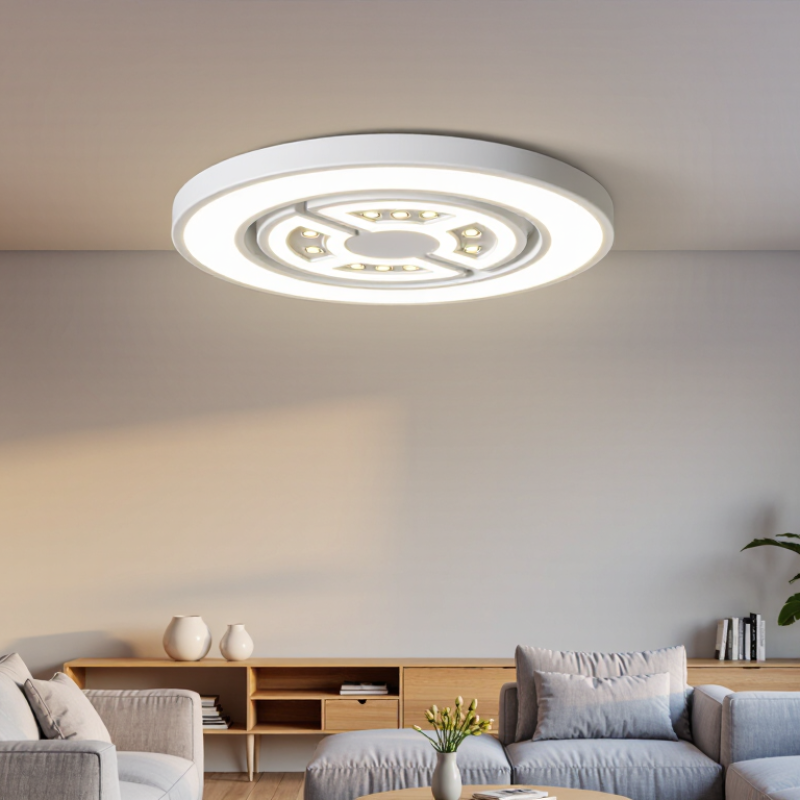
Why Do Integrated LED Fixtures Last So Long?

How Integrated LEDs Avoid the 1,000-Hour Failure Pattern of Incandescent Lamps

An incandescent lamp depends on a thin tungsten filament heated until it glows. Each time it switches on, the filament faces a sharp temperature change. Over many hours, tungsten slowly evaporates, leaving weak spots that can eventually break. A small bump or power surge may hasten that failure. Around 1,000 hours is a common reference point, not a guarantee for every bulb.

No glowing wire. Integrated LED fixtures produce light differently. Semiconductor chips emit light with far less heat at the light-producing surface, so there is no filament gradually thinning toward a break. They can also avoid repeated filament stress during everyday switching. But LEDs are not immune to wear. Heat can damage the chips and, especially, the electronic driver that regulates power. Good thermal design, sensible operating conditions, and reliable components all affect service life. In practice, a fixture may grow dimmer or fail through its electronics rather than suddenly going dark like a broken filament. That distinction is easy to miss. I have seen long-life claims treated as promises, when they are better understood as estimates under particular conditions.

How Heat Management Helps LEDs Reach 25,000–50,000 Rated Hours

Integrated LED fixtures can reach 25,000–50,000 rated hours, but heat management helps determine whether they approach that range. The U.S. Department of Energy’s LED guidance describes these typical lifetimes; they are not guarantees for every installation. Heat builds around the LED junction and driver, especially in enclosed ceiling cavities with little airflow. A metal heat sink conducts warmth away, while a well-designed fixture gives that heat somewhere to go. Small details matter. Dust, insulation, and a tight enclosure can raise operating temperatures.

The Illuminating Engineering Society’s LM-80 method measures LED package lumen maintenance over time, and TM-21 uses those results to project it. A common rating, L70, means projected light output has fallen to 70% of its initial level—not that the fixture suddenly stops working. That distinction is easy to miss. A fixture may still glow after its rated hours, but noticeably less brightly. Real-world temperature, switching patterns, and driver quality also affect service life. A warm ceiling is a warning, though not a diagnosis; checking airflow and fixture temperature can reveal problems before dimming becomes obvious.

How IES LM-80 Measures LED Package Output for at Least 6,000 Hours

IES LM-80 focuses on the LED light source, not the complete fixture. In controlled tests, laboratories measure package, module, or array output over time. Testing runs for at least 6,000 hours, with measurements taken at set intervals. That is months of steady operation, not a quick bench check. Technicians track lumen maintenance and may also record color changes at specified temperatures and drive currents.

Those conditions matter. An LED tested hot may behave differently from one kept cooler. The report lets designers compare performance under stated conditions, rather than relying on a vague lifetime claim. Still, 6,000 hours is not a promise that a fixture will last a particular number of years. LM-80 does not test the driver, wiring, seals, or the fixture’s ability to shed heat. Not quite the whole picture. Projection methods can estimate longer-term light output from LM-80 data, but the estimate has limits. When reviewing a fixture, I would want to know the test conditions and how the LED is installed. A neat chart can look reassuring; the real housing may run warmer than expected. That deserves a closer look.

How IES TM-21 Projects L70 Life from LM-80 Test Data

An L70 value estimates when an LED source’s light output falls to 70 percent of its initial level. It is not a guaranteed replacement date. LM-80 testing tracks lumen maintenance for LED packages, modules, or arrays under controlled drive currents and temperatures. The resulting measurements describe how that tested source performed over time.

IES TM-21 uses LM-80 results to project future lumen maintenance. The projection follows a defined method and is limited by the duration and quality of the test data. Useful, but bounded. A report should identify the tested source, operating conditions, and projection period, so readers can judge what the number represents. In a fixture, a warm heatsink, enclosed ceiling cavity, or higher ambient temperature can change operating conditions. Drivers and optics also have their own aging patterns. TM-21 does not independently predict their service life. That distinction is easy to miss when a single L70 number appears on a specification sheet. I still find the number more useful when its assumptions are visible.

What L70B50 Means: 70% Light Output for 50% of a Tested Population

Why Do Integrated LED Fixtures Last So Long?

L70B50 describes light output across a tested population, not a guaranteed lifespan for every fixture. L70 marks the point when output reaches 70% of its initial level. B50 means half the tested units are expected to have reached that point. The other half may reach it earlier or later. It is a statistical rating, not a promise.

The test data matters. IES LM-80 measures LED light-source lumen maintenance for at least 6,000 hours; 10,000-hour tests are also used. IES TM-21 uses those measurements to project longer-term performance, as described in U.S. Department of Energy guidance on LED luminaire lifetime. These projections concern light output, not every part of a fixture. A driver, seal, or connection can fail while the LEDs still produce adequate light. That distinction matters. In a real room, dust on a lens and hot air trapped above a ceiling can also change what people perceive. L70B50 helps compare maintenance expectations, but it cannot capture every installation condition. A little uncertainty remains.

FAQS

What does LM-80 measure?

It tracks light output from an LED package, module, or array. It does not test the complete fixture.

How long does an LM-80 test run?

Testing lasts at least 6,000 hours, with measurements taken at set intervals. That means months of steady operation.

Why do test temperatures and drive currents matter?

An LED tested at a higher temperature may perform differently from one kept cooler. Check the conditions in the report.

Does an LM-80 report predict how long a fixture will last?

No. It does not test the driver, wiring, seals, or fixture heat management. That gap matters.

What does an L70 value mean?

It estimates when an LED source reaches 70 percent of its initial light output. It is not a guaranteed replacement date.

How does TM-21 use LM-80 data?

It applies a defined method to project future light output. The estimate depends on the test data’s duration and quality.

Can an L70 projection describe every fixture’s performance?

No. A warm heatsink or enclosed ceiling cavity can change operating conditions. A single number may hide that detail.

What should I check when reviewing an LED lifetime claim?

Look for the tested source, temperatures, drive currents, and projection period. Also consider how the LED sits inside the fixture. A neat chart is not the whole story.

Conclusion

How long do integrated LED fixtures last? Unlike incandescent lamps, which often fail after roughly 1,000 hours as their filaments burn out, integrated LED fixtures are designed to provide much longer service. With effective heat management to keep operating temperatures under control, many are rated for 25,000 to 50,000 hours. Their output usually declines gradually rather than ending in a sudden failure, so useful life is often described in terms of how much light remains.

IES LM-80 testing measures LED package light output over a period of at least 6,000 hours. IES TM-21 uses those test results to project when output may reach the L70 threshold. An L70B50 rating means that, under the stated projection, half of the tested population is expected to retain at least 70% of its initial light output at the specified time. These measures help explain rated life, but actual performance also depends on fixture design, heat dissipation, and operating conditions.

Ethan

Ethan

Ethan is a seasoned marketing professional with a deep expertise in our company's innovative product line. With a passion for sharing knowledge and insights, he takes the lead in regularly updating our corporate blog, where he explores industry trends, product features, and effective marketing......