Why Should Wall Sconces Be Placed Beside Bathroom Mirrors?

Time:2026-09-21 Author:Aria
0%

Wall sconces beside a bathroom mirror do more than decorate the wall. They shape how clearly you see your face, hair, and skin during everyday routines. When light comes only from above, your brow and chin can cast harsh shadows. A pair of sconces at eye level creates softer, more balanced illumination across the mirror.

Where should wall sconces be placed in a bathroom? In most residential designs, they work best on both sides of the mirror, rather than directly above it. Their centers often align near eye level, although the ideal height depends on household members and mirror size. Leave enough space between the mirror edge and each fixture for comfortable viewing. Avoid placing bulbs where they shine directly into your eyes.

Details matter. A frosted shade can reduce glare, while a warm, high-color-rendering lamp can make skin tones appear more natural. Damp bathroom conditions also require fixtures rated for the intended location. A qualified electrician should confirm wiring, mounting, and suitable clearances before installation.

There is no perfect formula.

In my experience, symmetry feels calm, but practical adjustments sometimes matter more. A narrow vanity may need compact sconces, while a wide mirror can support larger fixtures. The final choice should balance appearance, task lighting, and safe installation. It should also reflect how the bathroom is actually used, not merely how it looks in a showroom.
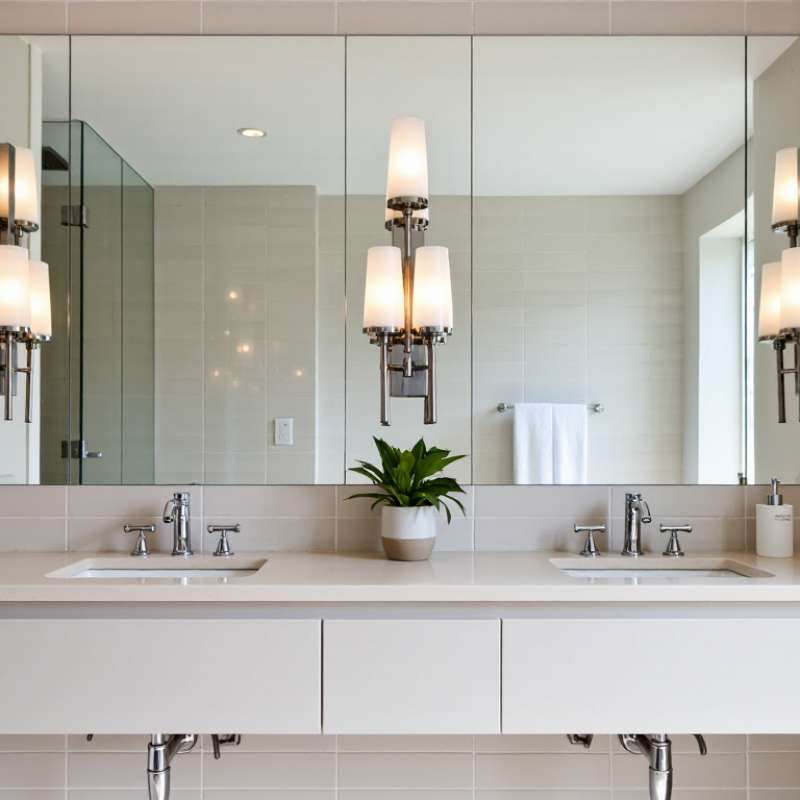
Why Should Wall Sconces Be Placed Beside Bathroom Mirrors?

Bathroom Task Lighting: Why Sconces Reduce Facial Shadows Around Mirrors

Why Should Wall Sconces Be Placed Beside Bathroom Mirrors?

Bathroom task lighting must reveal the face, not merely brighten the room. A ceiling fixture casts shadows beneath the eyes, nose, and chin. Sconces beside the mirror send light across the face from both sides. This creates more balanced vertical illumination and makes shaving, skincare, and makeup application easier. The Illuminating Engineering Society advises evaluating vertical illumination for facial tasks, because horizontal brightness alone can look impressive but perform poorly.

Placement matters more than decoration. Mount each sconce near eye level, with both fixtures spaced evenly beside the mirror. Frosted diffusers usually soften harsh highlights, while high color-rendering lamps show skin tones more accurately. The U.S. Department of Energy reports that LED lighting uses at least 75% less energy than incandescent lighting and lasts up to 25 times longer. That efficiency helps, but poor positioning still produces an unflattering face.

Here is the imperfect part: one mounting height cannot suit every household. Children, wheelchair users, and taller adults may need different arrangements. A lighting professional should check the mirror, user height, wall width, and wet-zone requirements together. I have seen bathrooms with expensive fixtures that still leave dark eye sockets. More light was not the answer. Better direction was.

Optimal Placement: Mount Sconces 60–66 Inches Above the Finished Floor

Why Should Wall Sconces Be Placed Beside Bathroom Mirrors?

The best starting point is placing each sconce beside the mirror, with its center 60–66 inches above the finished floor. Measure from the completed flooring, not the subfloor. This height usually aligns the light with the face, reducing shadows beneath the eyes, nose, and chin. It also keeps the fixture comfortable for most adults using the vanity.

Side lighting matters. A ceiling fixture often creates harsh shadows across the face. Two sconces can spread light evenly across the mirror, especially when they sit at similar distances from its edges. Leave enough clearance for the mirror frame, cabinet doors, and mounting hardware. A narrow bathroom may need smaller fixtures or a slightly adjusted position.

Not every bathroom follows the rule perfectly. A very tall mirror, vessel sink, or lower vanity can change the ideal height. I would stand at the vanity and mark the proposed center before drilling. Check the light from seated and standing positions. That small test can reveal glare that drawings miss. In some rooms, 60 inches works better; in others, 66 inches feels high. The fixture’s shade, brightness, and beam direction also deserve attention. A beautiful sconce can still perform poorly when its bulb shines directly into the eyes.

Balanced Illumination: Position Fixtures 36–40 Inches Apart on the Mirror

Wall sconces belong beside bathroom mirrors because side light reduces harsh shadows across the face. A ceiling fixture often brightens the room but leaves the eyes, nose, and chin unevenly lit. In practice, balanced lighting makes shaving, applying makeup, and checking skin details easier.

For a reliable layout, position the fixtures 36–40 inches apart, measured from center to center across the mirror. This spacing usually places each light near the mirror’s outer edges without creating bright spots in the middle. Keep both fixtures at equal height. Around eye level often works well, though household height and mirror size can change the ideal position. Test the placement with temporary tape first. It saves trouble.

Choose fixtures that spread light softly rather than producing a narrow beam. Frosted shades can help. The light should reach the face, not only the wall. A warm-neutral color temperature, around 2700–3500K, commonly feels comfortable in a bathroom. Very cool light can make skin appear pale and severe. I have seen attractive installations fail because the mirror was measured, but the user’s standing position was ignored. That detail matters. Leave enough clearance for cabinet doors, towel hooks, and hands near the sink. Electrical connections should also follow local requirements, with suitable protection for damp locations.

Why Should Wall Sconces Be Placed Beside Bathroom Mirrors? - Balanced Illumination: Position Fixtures 36–40 Inches Apart on the Mirror
Placement Dimension Recommended Measurement Lighting Benefit Practical Measurement Method Important Consideration
Distance Between Sconces 36–40 inches from fixture center to fixture center Creates balanced light from both sides of the face and helps reduce strong shadows across the nose, cheeks, and jawline. Measure across the mirror from the center point of one intended sconce location to the center point of the other. Treat this as a useful starting range, then adjust to the mirror width, wall space, and fixture size.
Horizontal Position Place each fixture beside the mirror rather than directly above it. Side lighting reaches the face more evenly than a single overhead source, which can cast shadows under the eyes and chin. Align the fixture centers with the vertical sides of the mirror or slightly outside the mirror edge when wall space allows. Avoid placing a sconce where the mirror frame, cabinet, or door will block the light.
Fixture Center Height Approximately 60–66 inches above the finished floor Positions the light near average eye level and supports more even facial illumination. Measure from the completed floor surface to the center of the sconce or its light-emitting area. Adjust for household users and mirror height; the light should illuminate faces without shining directly into the eyes.
Vertical Alignment Keep both sconces at the same height Maintains visual symmetry and distributes illumination consistently across the mirror. Mark both mounting points from the same horizontal reference line before drilling. Use a level to verify alignment, especially on tiled walls where small errors are easy to notice.
Clearance from Mirror Edge Leave enough space for the fixture body and installation hardware Prevents the fixture from appearing cramped and helps keep light from being obstructed by the mirror. Check the fixture width, backplate dimensions, electrical box location, and mirror frame thickness together. The exact clearance depends on the fixture dimensions and the available wall area.
Light Color 2700–3000 K for a warm, comfortable bathroom appearance Provides a flattering, residential light quality while remaining suitable for grooming tasks. Confirm the lamp or integrated light specification before installation. A consistent color temperature between the sconces and other bathroom lighting creates a more unified appearance.
Color Rendering CRI 90 or higher when accurate skin-tone and cosmetic color visibility is important Reveals colors more naturally for shaving, makeup application, and general grooming. Check the product’s stated color-rendering specification rather than judging by brightness alone. High color rendering does not automatically indicate higher brightness; both specifications should be considered.
Moisture Protection Use a fixture rated for its intended bathroom location Helps the fixture operate safely in a room exposed to humidity and occasional water vapor. Review the fixture’s location rating and compare it with local electrical requirements. Follow local codes and have electrical work completed by a qualified professional when required.
Supplementary Overhead Lighting Use ceiling lighting as general illumination, not as the only mirror light Combines broad room coverage with balanced side lighting at the mirror. Test the mirror area with the sconces on and overhead lighting adjusted to avoid excessive glare. Layered lighting improves flexibility, but excessive brightness or reflective surfaces can still create glare.

Color Accuracy: Choose CRI 90+ LEDs for Reliable Grooming and Makeup

Wall sconces belong beside bathroom mirrors because side lighting reduces the harsh shadows created by overhead fixtures. It illuminates both sides of the face more evenly. This placement also helps you judge skin tone, shaving lines, and makeup details with greater confidence.

Color accuracy matters as much as fixture position. Choose LEDs with a color rendering index of 90 or higher, especially for grooming and makeup. A high-CRI light reveals subtle differences between foundation, blush, and natural skin tones. Lower-quality light may make colors appear gray, yellow, or unusually vivid. That mistake can follow you outside.

Look for diffused lenses and matching sconces on both sides of the mirror. Install them near eye level, while adjusting the height for household users. A neutral color temperature around 3000K to 4000K usually feels clear without appearing overly blue. I once relied on a bright ceiling lamp and thought my makeup looked balanced. Daylight proved otherwise. It was a useful reminder: brightness cannot replace accurate light. Check the CRI rating, but do not trust the label alone. Sample the fixture against a white towel and familiar skin tones before installation.

Safety and Comfort: Use Damp-Rated Fixtures and 150–300 Lux Lighting

Wall sconces belong beside bathroom mirrors because they light the face from both sides, reducing shadows beneath the eyes, nose, and chin. Ceiling fixtures often create harsh downward shadows. Side lighting feels calmer during shaving, makeup application, and evening skincare. It also makes small bathrooms appear more balanced.

Safety must guide the installation. Choose fixtures specifically rated for damp locations, and keep them away from direct shower spray unless their protection rating allows it. IEC 60529 defines IP protection levels, while local electrical codes determine acceptable placement near water. A qualified electrician should confirm the circuit, grounding, and fixture location. Small details matter here.

Aim for 150–300 lux at the mirror surface. EN 12464-1:2021 lists 200 lux as a reference for sanitary rooms, while the Illuminating Engineering Society’s Lighting Handbook places personal-care tasks near the upper end of this range. Use diffused lamps with a color rendering index of at least 80, preferably 90 for accurate skin tones. Measure at face height, not only on the wall. That distinction is easy to miss. I have found that very bright, cool light can feel clinical, even when the measurement looks correct. Dimming may offer better comfort, but it should not replace proper fixture spacing or damp-location protection.

Why Should Wall Sconces Be Placed Beside Bathroom Mirrors?

Safety and Comfort: Use Damp-Rated Fixtures and 150–300 Lux Lighting

Side-mounted sconces distribute light evenly across the face, helping reduce shadows caused by overhead fixtures. A mirror task zone of approximately 150–300 lux supports comfortable grooming, while higher levels may be useful for detailed makeup or shaving. Fixtures installed in bathrooms should be damp-rated and suitable for the local electrical requirements.

FAQS

Why should bathroom sconces sit beside the mirror?

Side lighting reduces shadows beneath the eyes, nose, and chin. Faces look more evenly lit.

How far apart should the fixtures be?

Place them 36–40 inches apart, measured center to center. Keep both fixtures at equal height.

Where should the fixtures sit vertically?

Eye level often works well. Adjust the height for household members and mirror size.

How can I test the layout before installation?

Mark the positions with temporary tape. Stand at the sink and check your face in the mirror. It may reveal awkward placement.

What light quality works best for grooming tasks?

Choose diffused light with a color rendering index of at least 80. A value near 90 shows skin tones more accurately.

What color temperature feels comfortable in a bathroom?

Warm-neutral light around 2700–3500K usually feels comfortable. Very cool light can make skin look pale.

How bright should the mirror area be?

Aim for about 150–300 lux at face height. Measure the mirror surface, not just the wall.

What safety details matter near water?

Use fixtures rated for damp locations. Keep them away from direct shower spray unless their protection rating allows it.

What clearance should I leave around the fixtures?

Check cabinet doors, towel hooks, and hands near the sink. A beautiful position can still become inconvenient.

Should I use a dimmer?

Dimming can improve comfort during evening skincare. It cannot replace safe protection, suitable spacing, or correct installation.

Conclusion

Wall sconces are an effective way to improve bathroom task lighting, especially around mirrors where overhead fixtures can create unflattering facial shadows. By placing light on both sides of the mirror, illumination reaches the face more evenly, making shaving, skincare, and makeup application easier. Where should wall sconces be placed in a bathroom? A practical guideline is to mount them approximately 60–66 inches above the finished floor and position them 36–40 inches apart, depending on the mirror’s width and the user’s eye level.

For dependable grooming and makeup results, choose LED lamps with a color rendering index of 90 or higher so skin tones and cosmetic colors appear more accurately. Comfort and safety also matter: select damp-rated fixtures designed for bathroom conditions, and aim for approximately 150–300 lux of useful illumination around the mirror. This balanced arrangement creates a brighter, more comfortable, and visually consistent bathroom without harsh shadows or excessive glare.

Aria

Aria

Aria is a dedicated marketing professional with a deep passion for innovative strategies and a keen understanding of our company's product offerings. With a wealth of experience in the industry, Aria excels at crafting engaging content that highlights the unique features and benefits of our......