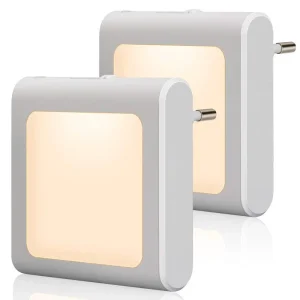
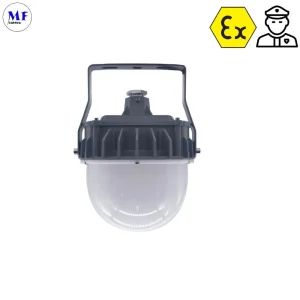
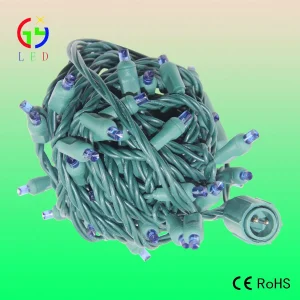
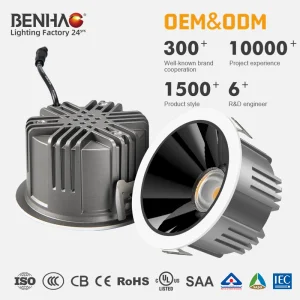
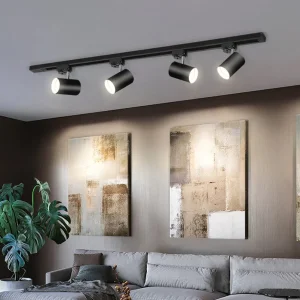
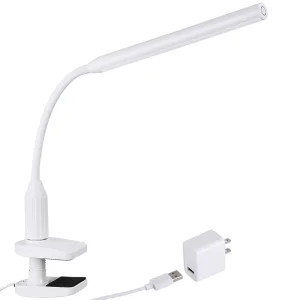
Discover our highly specialized product lines engineered for heavy commercial, industrial, and high-end residential illumination solutions.
Established in 2002, Haining Glow Light Co., Ltd. stands as a benchmark of engineering excellence and industrial capability in the global solid-state lighting arena. For over two decades, we have seamlessly integrated design, advanced research and development, vertical manufacturing, and comprehensive global after-sales infrastructure. Our engineering philosophy targets architectural track lighting systems, modern picture lighting, industrial high bays, and intelligent smart drivers, enabling commercial spaces globally to achieve optimum visual performance while satisfying strict regulatory parameters.
Our state-of-the-art facility adheres to the stringent SEDEX 4P (Supplier Ethical Data Exchange) factory audit, ensuring that all our output meets the highest tiers of ethical compliance, fair labor standards, and ecological integrity. Our R&D team features core technical designers and structural engineers boasting more than 10 years of individual tenure in the optoelectronic field. From conceptual prototyping to optical simulations and thermodynamic testing, we deliver custom OEM/ODM solutions tailored for global importers, construction contractors, and boutique architectural studios.
"Compliance is not merely a benchmark; it is the cornerstone of our manufacturing philosophy. Every luminaire manufactured in our factories is certified for international markets under UL, cUL, CE, RoHS, VDE, and GS frameworks."
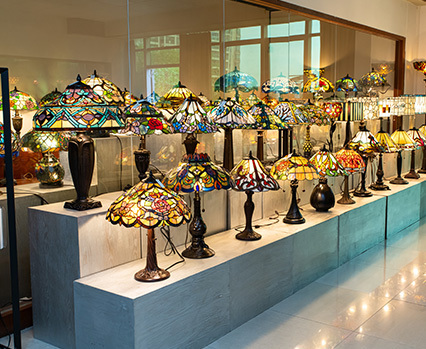
Over Two Decades of Professional Commercial & Decorative Manufacturing Experience
The international commercial lighting sector is undergoing an unprecedented structural transition towards flexible, adaptive, and highly energy-efficient architectural lighting systems. Driven by stringent sustainability targets, including the EU Energy Efficiency Directive (EED) and ASHRAE 90.1 in the United States, commercial property developers are steering away from fixed downlighting grids. They are aggressively embracing modular track configurations. Track lighting systems offer unmatched flexibility: as spatial planning changes in retail showrooms, art galleries, and modern collaborative workplaces, luminaires can be rearranged, replaced, or repositioned along live conductors without costly structural renovations.
Furthermore, the evolution of low-voltage (specifically DC 48V magnetic track lines) has transformed safety, minimalism, and integration options. By moving the driver components outside the luminaire head or utilizing miniature, highly integrated gallium nitride (GaN) driver circuits inside the adapters, contemporary track lights achieve exceptionally slim profiles. As key suppliers, Chinese manufacturers leverage highly integrated optoelectronic supply chains, localized die-cast aluminum profile extrusions, and state-of-the-art SMD/COB bonding facilities to deliver reliable, high-efficacy systems to global markets.
A modular track system is no longer just a structural rail; it represents the central nervous system for commercial spatial lighting. By incorporating intelligent control modules (such as DALI-2, 1-10V, Zigbee, Casambi, and Matter-compliant systems), our track networks act as physical communication buses. They allow building management systems (BMS) to dynamically adjust color temperatures (Tunable White from 2700K to 6500K) and light levels in response to external natural daylight patterns. This concept, known as Human Centric Lighting (HCL), has been proven to enhance occupant well-being, visual comfort, and workplace productivity.
High-contrast spotlighting configurations designed to emphasize merchandise textures, colors, and geometries. Utilizing specialized COB chips with high color rendering indexes (CRI Ra > 95, R9 > 80) ensures products look vibrant and true-to-life.
UV-free and IR-free conservation-grade illumination that prevents color degradation of valuable paintings, sculptures, and architectural materials. Seamless dimming profiles prevent visual flicker during display transitions.
Understanding the optoelectronic mechanics of a commercial track luminaire is key to distinguishing high-grade hardware from subpar alternatives. High-quality track light systems utilize structural grade extruded aluminum profile housings (A6063-T5 alloy) to maximize heat dissipation. Efficient thermal management keeps the junction temperature of the LED chip below 85°C. This prevents lumen depreciation and maintains color point stability over a rated lifespan exceeding 50,000 operational hours.
From an optical standpoint, light distribution is managed using PMMA TIR (Total Internal Reflection) lenses or precise aluminum vacuum-metallized reflectors. By controlling spill light, these optical designs ensure sharp beam angles and minimize high-angle glare. The integration of high-quality constant-current drivers is another critical factor. These drivers feature active Power Factor Correction (PFC > 0.95) and total harmonic distortion (THD) under 10%, complying with strict global power quality standards.
Distributing electrical equipment internationally requires navigating complex, localized compliance frameworks. Products must meet target market safety and electromagnetic compatibility (EMC) regulations to prevent customs delays or liability issues. Haining Glow Light Co., Ltd. ensures smooth market access through comprehensive certifications:
Beyond electrical safety, our factory audits verify our operational integrity. Our SEDEX 4P certification confirms that our facilities follow ethical supply chains, prioritize environmental management, and maintain safe working environments.
Why premier construction designers and electrical engineers choose our custom architectural lighting solutions.
Featuring genuine Bridgelux, Citizen, or Cree COB light engines, calibrated to achieve up to 130 lm/W system efficacy while preserving strict chromaticity values.
Support for isolated and non-isolated drivers. Flicker-free designs designed to protect against grid surges up to 4kV, maintaining smooth output currents.
High-purity 6063 aluminum structures designed to house complex track configurations, ensuring structural rigidity and optimal heat dissipation.
How our R&D engineering department stays ahead of commercial lighting trends and smart building integrations.
Integrating Casambi, Matter, and DALI-2 protocols directly onto low-voltage magnetic track networks to enable remote device addressing and energy monitoring.
Developing miniaturized micro-lens arrays (MLA) to achieve extremely narrow beam angles (down to 8°) without losing optical efficiency or generating stray light.
Transitioning to recycled post-consumer aluminum profiles and lead-free solder pastes across our production lines, aligning with global green building standards.
Optimizing light spectrums to mimic natural daylight cycles, supporting human circadian rhythms in commercial and residential indoor environments.
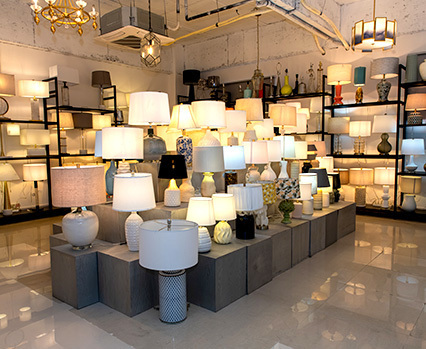
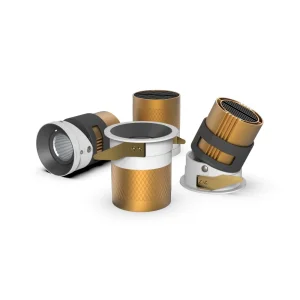
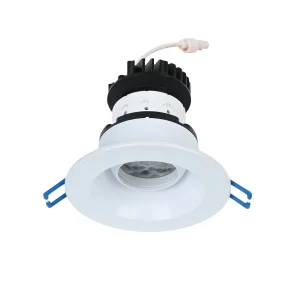
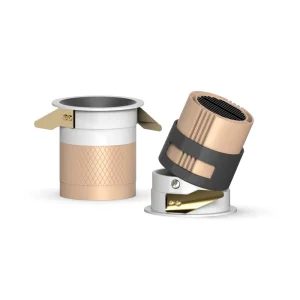
Our Comprehensive Range of Specialized LED Downlights, Track Fixtures, and Custom Optical Modules
Expert answers to common engineering, installation, and procurement questions from lighting designers and distributors.
Low-voltage (DC48V) magnetic track lighting systems offer distinct mechanical and electrical advantages. First, they provide safety during installation and modification; users can hot-plug, slide, or change luminaires along the track without turning off the system, with zero risk of electric shock. Second, they support compact fixture designs, as they don't require internal line-voltage step-down drivers inside the adapter. However, high-voltage systems (like 3-phase, 4-wire configurations) remain highly effective for long run lengths with minimal voltage drop and for heavy commercial layouts that require high wattage per circuit without separate remote driver locations.
We maintain color consistency by using high-quality light emitting diodes (LEDs) binned within 2-step or 3-step MacAdam Ellipses (SDCM < 3). We work with industry-standard packaging suppliers like Citizen, Cree, and Bridgelux to source chips with consistent chromaticity coordinate distributions. Additionally, we verify each batch using an integrating sphere and goniophotometer. This testing ensures that multi-unit commercial installations show no visible variations in color temperature or spectrum, even when luminaires are mounted closely on a single track run.
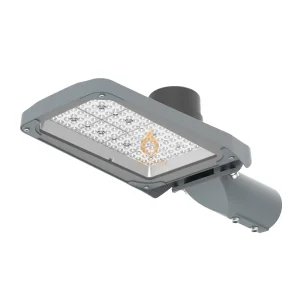
Isolated drivers use an internal transformer to physically and electrically separate the high-voltage input mains circuit from the low-voltage output circuit driving the LEDs. This layout offers high safety and design flexibility, though it slightly increases cost and space. Non-isolated drivers, which are commonly used in street lamps and some high-bay applications (such as our 50W LED Roadway Street Public Area Lamp with Photocell), connect the input and output circuits directly. This design is highly efficient (often > 92%) and cost-effective, but it requires robust insulation and housing materials to protect users and maintenance staff.
Yes. For harsh industrial settings, we supply certified explosion-proof high-bay systems and IP66-rated fixtures. These models feature copper-free cast aluminum alloy enclosures, tempered borosilicate glass lenses, and heavy-duty silicone gaskets. These features allow the luminaires to withstand corrosive vapors, high humidity, and explosive gas or dust atmospheres (typical in LNG, chemical processing, and marine applications). They are certified to perform reliably in ambient temperatures ranging from -30°C to +55°C.
With our in-house design and prototyping team, we support customized design requests. Customers can choose custom aluminum profiles, specify custom color temperatures, and request specialized optical distributions or integrated control modules. We work with clients to finalize CAD and 3D files, run optical simulations, and produce physical samples for testing. This process allows us to deliver certified, project-specific lighting solutions that meet local regulatory requirements.
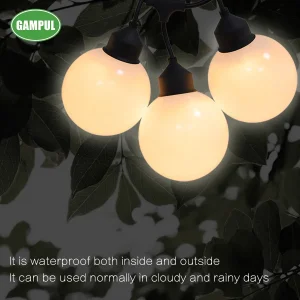
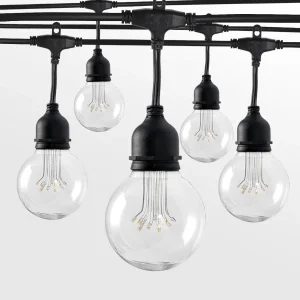
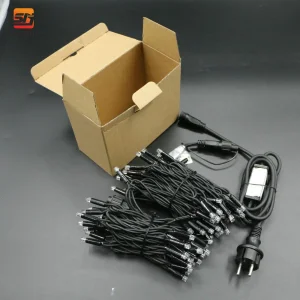
Browse our complete product range, including downlights, track kits, high bays, and custom decorative light strings.
 Glow Light